Dead Internet and Hyperreality
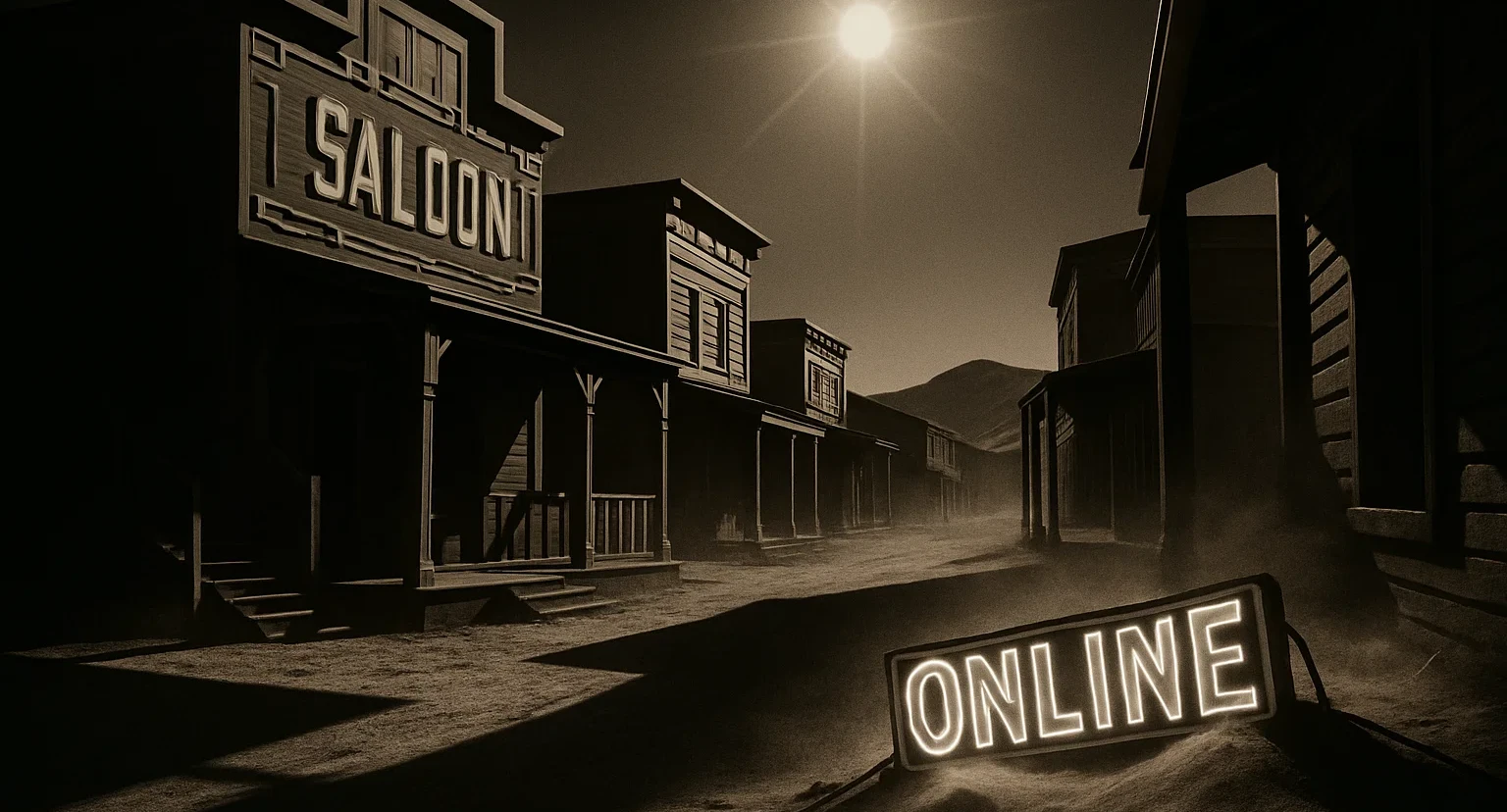
The Internet is still standing, illuminated, with its bustle of accounts and posts. But there's no one on the other side anymore.
The Dead Internet Theory began as a minor conspiracy on an underground forum. Today, data seems to give it empirical form: more than half of online traffic comes from robots that publish and consume content; brands no longer know if they're dealing with real or synthetic customers, and users doubt whether those who seduce them on screen are "real" people. This text explores how we got here, and what it means to live within a reality that no longer needs us.
The Dead Internet Hypothesis
"Agora Road's Macintosh Café" is a forum created in 2017 as a space for fans of vaporwave music, the retro aesthetic of the 90s and nostalgic digital culture. The central theme of this site was (and still is) music, art, retro aesthetics, vintage memes, and subforums about "old internet". Among conversations about music and trends, around 2021 a thread appeared titled Dead Internet Theory: Most of the Internet Is Fake. It explains that, approximately since 2016, most content circulating on the internet is generated by automated activity.
Large proportions of the supposedly human-produced content on the internet are actually generated by artificial intelligence networks in conjunction with paid secret media influencers in order to manufacture consumers for an increasing range of newly-normalised cultural products.
The author claims that memes (Jesus-raptor, Pepe the frog, ...) seem to emerge and evolve with certain intentions (not spontaneously), and even suspects that certain influencers aren't even real.
A few months later, a publication in The Atlantic gave this theory broader exposure as part of a project on conspiracies in North America. Kaitlyn Tiffany, its author, points out how automation and sales-oriented optimization through personalization algorithms have displaced human interaction, making the online experience begin to feel empty and artificial. At that moment (August 2021) she concluded that although the Dead Internet theory had conspiratorial overtones and seemed hard to prove, it did reflect a real feeling of loss of authenticity on the web.
In early 2025, Muzumdar and others published in the Asian Journal of Research a small paper detailing the process by which social networks have gone from being interaction platforms to spaces dominated by advertising algorithms. They argue that for years they have been transforming their architecture to prioritize participation and exchange above discovery and "encounters" between users. A central aspect of this strategy is the shift from chronological content presentation to algorithmically selected feeds. This highlights content that most matches the user's perceived interests to "trap" them in the scroll. At the same time, they seek to prioritize controversial or sensationalist content that encourages interaction. Until now, the problem was that there wasn't enough evocative or sensationalist content with sufficient capillarity to "trap" any type of user in the scroll. But AI has broken that bottleneck: its low cost and scalability already allows platforms to flood feeds with "relevant" material, ensuring users remain immersed and exposed to ads—fundamental for revenue generation.
The Data
This theory—until recently marginal and conspiratorial— seems to have transformed into an empirically documented phenomenon. Let's see:
More than 50% of new internet content is already generated by robots
Mid-year, Common Crawl analyzed a random sample of 65,000 URLs (from a database of more than 300 billion pages) with publication dates from January 2020 to March 2025, and found that more than 50% had been generated by automated algorithms
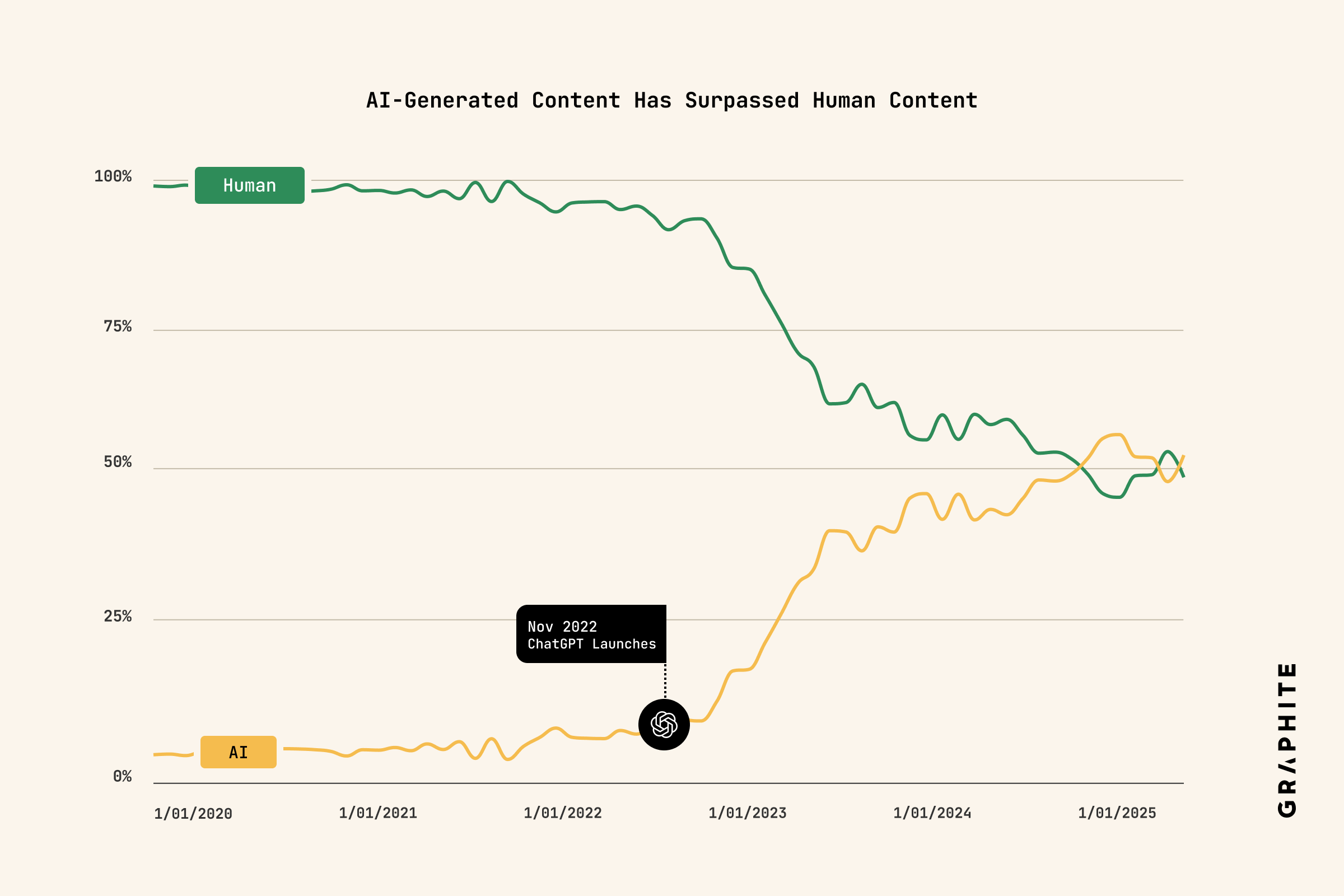
Source: Common Crawl Analysis
However, it's interesting to note that although this "synthetic" content is usually not well positioned in Google or ChatGPT, the authors claim that
In many cases, AI-generated content is as good or better than content written by humans (MIT Study). It is often hard for people to distinguish whether content is created by AI.
Most web traffic already comes from robots
For the first time in history, automated traffic exceeds human activity, representing 51% of total web traffic in 2024. Additionally, malicious bot activity increased for the sixth consecutive year, now representing 37% of total internet traffic, a considerable increase from 32% in 2023. These malicious bots no longer just engage in web-scraping; they now exploit APIs, leverage internal business logic, and fuel large-scale fraud.
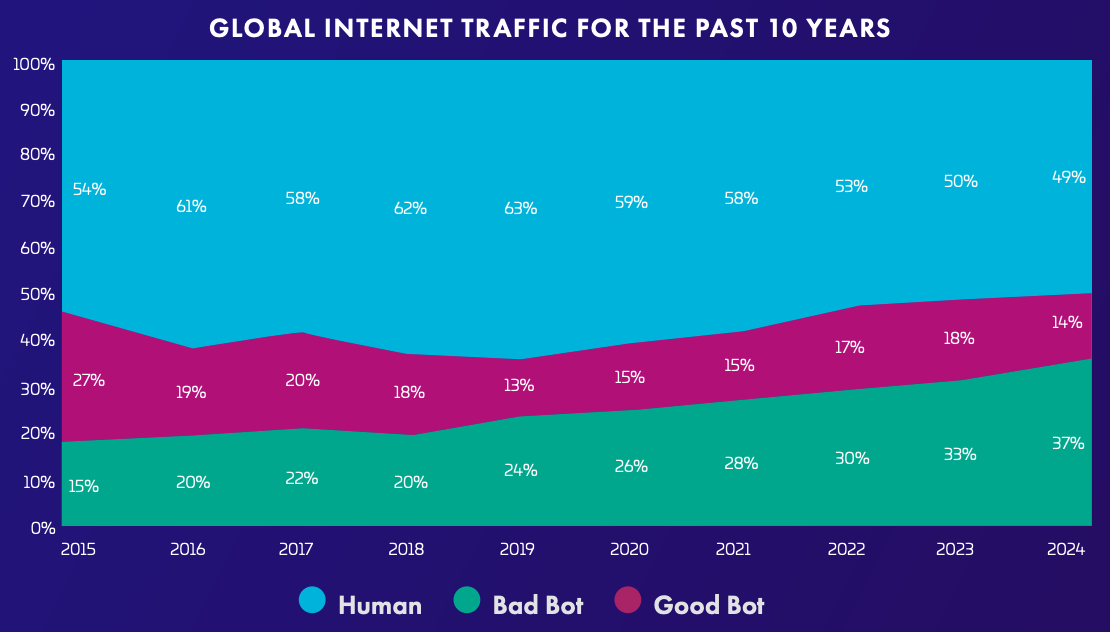
Source: Imperva Thales Report
In certain industries, automated traffic already accounts for more than two-thirds of total traffic, especially the entertainment industry where barely 15% of content consumption or interaction has been performed by a human being:
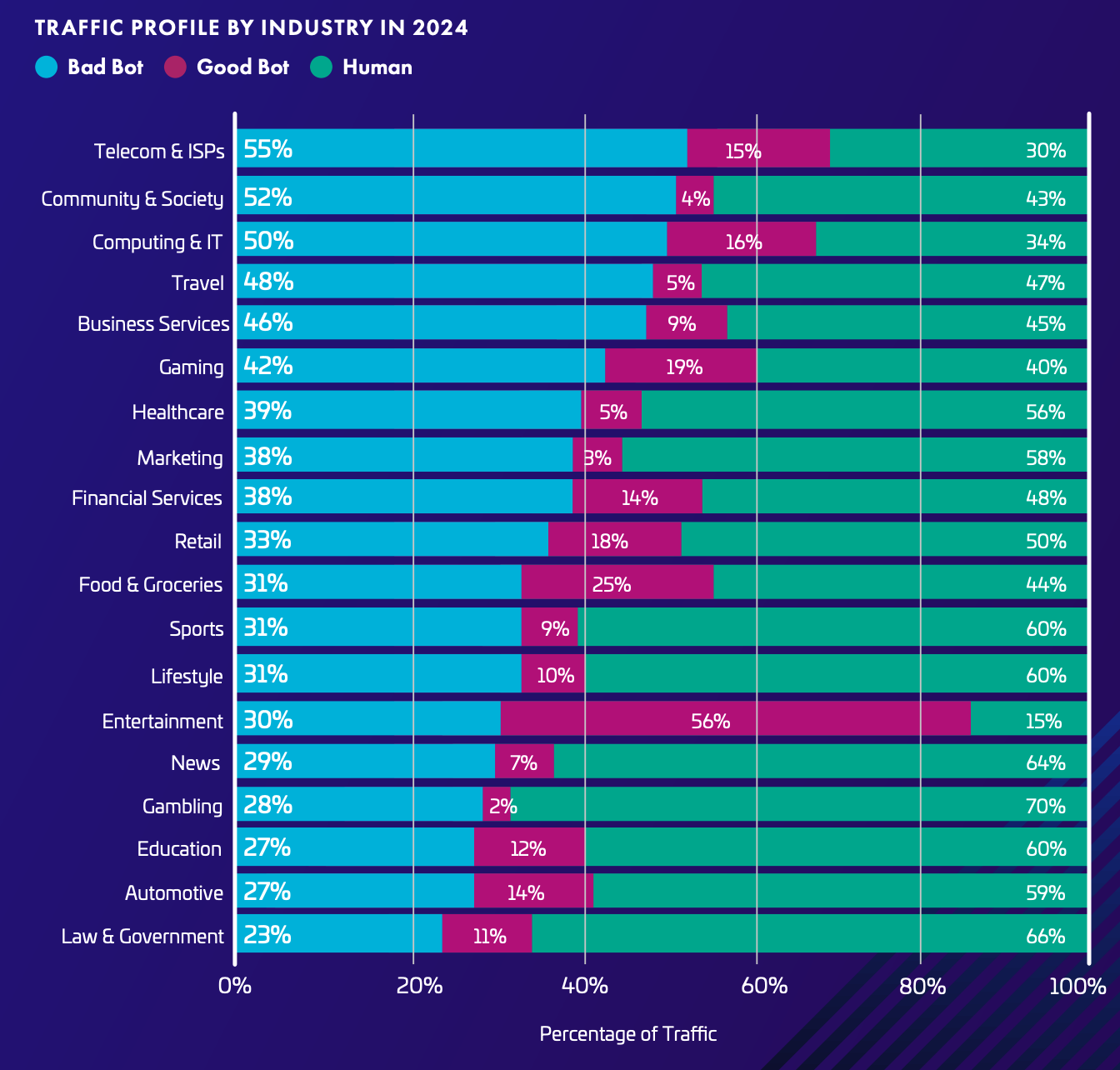
Source: Imperva Thales Report
Social Media Zombification: stagnant user base, only bots growing
According to DataReportal, social networks have grown by almost 5% in number of users (around 259 million new social profiles) in the last year, which means—in theory—that 2 out of 3 people on earth have some social network (92.6% of internet users). At the same time, Meta claims that, in just the last 6 months, it removed more than 250 million fake accounts (3% of its total user base), LinkedIn 6.7% (more than 80 million) of its total registered members, and X/Twitter 77%; 464 million accounts removed for being spam or fraudulent bot accounts. You don't need to be a math whiz to see that the net balance has been negative.
Fake Customers and Synthetic Influencers
It's becoming a challenge to differentiate human customers from robots. Algorithms are already capable of emulating "legitimate" behaviors, generating credible reviews that bypass automatic filters (by "verified purchase" and human style). For example, independent studies (Pangram Labs) have detected that more than 3% of Amazon reviews are already AI-generated; and the rate rises to 5% in premium categories (beauty, baby, wellness).
In the same vein, Zillow—a marketplace specialized in real estate sales and rentals in the US—detected that more than 25% of its reviews had been generated by AI. TrustPilot also recently admitted that it removed more than 4.5 million fake reviews (7.4% of the total) for being fraudulent AI-generated content.
Users are also starting to have problems differentiating "real" influencers from robots. In 2023, the story of an OnlyFans profile named "Claudia" went viral, which accumulated thousands of followers and generated monthly income of several thousand dollars before it was revealed that all photos, conversations, and content were AI-produced. Soon after, communities emerged on Reddit and Discord where you can now buy images, packs, and "personalized" content completely generated by AI ("AI Girlfriend", "AI Feet Pics", "AI Cosplayer"), even with monthly subscriptions and "interaction" via chat. Agencies also appeared (e.g. The Clueless, Deep Agency or Fable Studio) that manage Instagram and TikTok accounts (generally female) whose appearance, voice, videos, and direct messages are entirely synthetic. Some of these "models" even offer rates for adult content or private interaction via Telegram.
Recently, Mark Zuckerberg acknowledged that the average American has only three close friends, though they would like to have at least fifteen. He described this situation as an "epidemic of loneliness" and stated that the future of social relationships on his platforms could involve bonds with AI-powered bots, rather than with people.
The reality is that many people don't have connections, and often feel lonelier than they'd like
(Mark Zuckerberg)
Baudrillard and Mini Hollywood of Tabernas
Also known as Oasys, "Mini Hollywood" is a theme park located between the towns of Tabernas and Vélez-Blanco (Almería). This place was initially built as a set and filming location for Spaghetti Westerns during the 60s. Sergio Leone filmed the dollar trilogy there ("A Fistful of Dollars" (1964), "For a Few Dollars More" (1965) and "The Good, the Bad and the Ugly" (1966)), but it was also the set for the original "Django" by Sergio Corbucci (1966), or "Conan the Barbarian" (1982)—the film that introduced Schwarzenegger. Today it's a collection of sets, wooden streets, saloons, the sheriff's jail… everything perfectly preserved, but with no one and nothing on the other side. The windows don't open to any room; the walls don't hold anything up. It's a decadent place set up to be looked at.
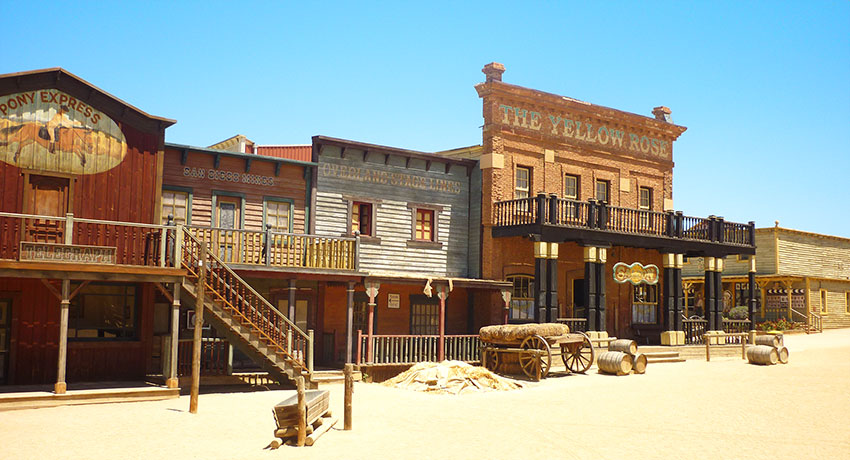
Mini Hollywood of Tabernas: sets with nothing behind them
Mini Hollywood of Tabernas is literally a simulacrum: a city that never existed, created to represent a West that didn't exist as such either. It's a copy that no longer needs an original because the original (the real West, the filming, the golden age of westerns) has disappeared.
Baudrillard claims that modernity is the transition through four stages in our relationship with reality:
- The image reflects a profound reality (a realistic painting, for example).
- The image disguises or distorts that reality (propaganda, fiction).
- The image pretends to represent something real, but doesn't (advertising, pop culture).
- The image has no relation to any reality: it's pure simulacrum (AI, social networks).
At point 4, the copy replaces the original, and there's no way back. Like the fake towns in cinema, the Internet is still standing, illuminated, with its bustle of accounts and posts. But there's no one on the other side anymore. The dead internet would be the final stage of the simulacrum, where machines no longer copy the human, but replace it so well that no one notices the difference.
And when you live in an environment dominated by simulacra—that is, by representations without real referent—, manipulation becomes invisible. It's no longer about lying to you about reality, but about defining what reality is. In the "society of the simulacrum" power no longer imposes itself, but seduces and entertains.
You have to understand that most of these people are not ready to disconnect, and many of them are so accustomed and depend so desperately on the system that they will fight to protect it.
(Morpheus)
Epilogue: Post-Hyperreality
Baudrillard thought the simulacrum could sustain itself indefinitely; a kind of "end of history," à la Marx, or Fukuyama. But if we accept that the society of the simulacrum is the algorithmic reality we're currently living in, we know that algorithms cannot feed on synthetic content indefinitely. This hyperreality is not stable: it's entropic.
- Each new iteration introduces noise and distortion, like a photocopy of a photocopy. Under a strict diet of synthetic information, AI models could end up amplifying micro-errors and multiplying hallucinations.
- Without human input (errors, nuances, context), the system loses semantic anchors. For example, there are already phenomena of "cloned" websites competing to rank meaningless content (SEO on SEO on SEO).
- It ends up generating content that seems to make sense, but doesn't. For example, imagine a deepfake of a synthetic influencer.
In other words: AI hyperreality rots from within.

Hyperreality rotting